

S6 0.7kW Mini Single Tracker with DC isolator
Product details
The Solis S6 Mini 0.7kW (model S6-GR1P0.7K-M, part number S6-GR1P0.7K-M-DC) is a 700 W single-phase grid-tie inverter with the DC isolator already inside the IP66 case. Its one string takes a recommended 1.1 kW of panels for a maximum 0.77 kVA of AC output, which in practice means two modules rather than three.
Two 550 W modules fill that 1.1 kW; a third fits only if every panel is about 365 W or less. That, rather than conversion, is the reason to take the 0.7 kW instead of its 1 kW sibling — both are quoted at 96.6% peak and 95.3% EU efficiency in the same 310 × 373 mm case. It is the inverter for the arrays a full-size unit is wasted on: an outbuilding with room for one pair of modules, a single narrow roof face, or a small array feeding a workshop supply.
The short version
It hangs vertical, within 5° of upright, with 300 mm above and to each side and 500 mm below: about 910 × 1,170 mm of clear wall once the 310 × 373 mm case sits in the middle of it. IP66 allows an outside wall, but Solis wants it out of direct sun and rain, with a shade above 40 °C ambient, and a closed cupboard or boxed-in corner is out, because it cools by convection alone and the case can pass 75 °C. The wall behind it has to be non-combustible, so a timber outbuilding needs a fireproof board first. On the AC side it draws 4.4 A at most, on 2.5–6 mm² cable rated to 105 °C, 6 mm² past 20 m, behind a 10 A breaker.
Is it the right inverter for you?
- Two big panels, or three small ones: two modules of up to 550 W reach the recommended 1.1 kW, three only at about 365 W each. One on its own will not do, because a single module sits at roughly 30–45 V at maximum power and the inverter wakes at 60 V. Then check the string's cold open-circuit voltage against the 600 V input limit, the panel's maximum-power current against 14 A and its short-circuit current against 22 A.
- Room to grow? The 1 kW S6 Mini takes a recommended 1.5 kW in the same 310 × 373 mm case, at the same 7.4 kg.
- Solar already on site: G98 counts every micro-generator at the premises against 16 A per phase, 3.68 kW on a single-phase supply, so this unit's 0.77 kW has to fit inside whatever is left. Where it does not, G99's small-generation route allows an aggregate below 32 A per phase when a G100 export limitation scheme holds export to 16 A, applied for on Form A1-2 with a DNO answer inside 10 working days; whether this inverter's own CT can be that scheme for the whole site is for the installer and the DNO to agree.
Choose UK or EU above
UK version
SOL-0.7-MINI-S6-DC- Measures export with
- A CT clamp
- Commissioning
- Fail-safe ON for G100
EU version
SOL-0.7-MINI-S6-EU-DC- Measures export with
- A Solis smart meter
- Meter extra
- 24-hour consumption data
Both hold export to a figure set in watts, down to zero; only the sensing hardware differs, and the manual says each unit is built as one or the other. A CT Model takes a current sensor, which has to sit on the grid side. A Meter Model takes a single-phase meter — the DDSD1352-C or the ACR10RD16TE — on either side, though the 24-hour consumption view needs it on the grid side with the 24H switch on. Solis supplies the EU part number as the Meter model, so a CT will not work with it. UK installs run fail-safe ON for G100, which is why a damaged CT lead stops generation rather than quietly releasing the limit. And where an energy supplier asks for the output to be capped below 700 W, set it with Output_P and Restore, which is stored in flash and survives the overnight shutdown; Set Output Power looks the same on screen but is held in RAM and is gone by morning.
Note: This inverter can be reduced in power with the agreement of the energy supplier in order to comply with possible regulations of a balcony power plant in your country. For this purpose, the document "Manufacturer Power Limit Declaration" issued by Solis (filed under Documentation) must be completed and sent to that energy supplier. In addition, please note that the inverter is connected with at least 2.5 mm² in the distribution. Please refer to the corresponding manual when setting up the inverter.
In the box, and not
- Inverter, back plate, the two M4×9 screws that lock it to the plate, and the manual
- One pair of MC4 DC connectors, an AC connector and an RJ45 plug for DRM
- Every connection is a plug on the underside, so the cover stays shut for the whole job — opening it without Solis's authorisation voids the warranty
- Wall fixings: the manual leaves the expansion screws for the back plate to the installer
- CT clamp (UK) or Solis smart meter (EU), 4 mm² PV1-F cable and a crimp tool for the MC4s
- AC side: the 10 A breaker, and an external RCD if the wiring rules on site call for one
- Data logger — RS485 is on board, and without a stick the screen still holds today's, this month's and the total yield, plus the last 100 alarms
Grid approval
At 0.77 kW of output this sits well inside the 3.68 kW that G98 allows per phase, so the installer commissions first and sends the installation document to the DNO no later than 28 days afterwards. The Documents tab holds the GB G99 Form A2-3 (ERD-CR202108008), the Northern Ireland G98/NI Form C (ERD-CR202108012) and G99/NI (ERD-CR202108013), and Ginlong's own G100 test report (ERD-CR202108009) covering S6-GR1P0.7K-M to 3.6K-M. There is no Great Britain G98 form among them, and none is wanted: the G99 form records the unit as fully type tested, and states that where a fully type-tested unit is on the ENA register the installation document carries the manufacturer's reference number rather than an attached certificate.
Order with it
-
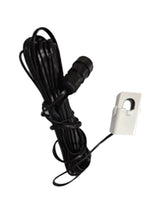 100A Current Transformer, 10 m
What the UK version's export limiting measures through, on the grid side. Its 33.3 mA secondary matches the inverter's default 100 A:33.33 mA ratio, so there is no sampling ratio to change at commissioning, and 10 m of lead reaches back from an outbuilding.
-
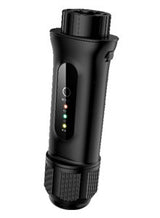 Wi-Fi and LAN data logging stick
Solis's datalogger guide files the S6-GR1P(0.7-3.6)K-M under the 4-pin logger type, which is what this stick uses. USB logging on this model is a Brazilian-market function, so a USB stick is the wrong part here.
-
 Warranty extension to 20 years
Cover runs five years as standard, from commissioning or six months after the unit leaves the factory, whichever comes first. An extension has to be applied for within 12 months of installation, with the serial number and proof of purchase; a 10-year step is listed as well. Keep the invoice and the installation certificate, because a claim asks for both.
Buying more than one
| Pack | Units | Price | Per unit | Saving |
|---|---|---|---|---|
| Single UK | 1 | £146.06 | £146.06 | — |
| Pack of 5 UK | 5 | £706.13 | £141.23 | 3.3% |
| Pack of 10 UK | 10 | £1,397.92 | £139.79 | 4.3% |
| Pallet of 24 UK | 24 | £3,320.05 | £138.34 | 5.3% |
| Single EU | 1 | £161.30 | £161.30 | — |
Prices exclude VAT. Per-unit figures are worked out from the pack price.
Questions
No. The AC side is a quick-connect plug for fixed wiring on its own circuit, behind a 10 A breaker. Great Britain's plug-in solar rules, in force since 27 August 2026, cover only complete kits — module, inverter, a lead with a BS 1363 plug and a mounting system — rated up to 800 VA, meeting the government's interim product specification and listed on the ENA register. A bare inverter is not one of those, whatever its output.
AC supply first, then the DC switch. The red POWER LED lights, the screen reads INITIALIZING, and generation starts 30 to 300 seconds later depending on the grid code. "Limit by DRM" on screen means DRM was switched on with nothing closing RJ45 pins 5 and 6. Arc-fault detection is fitted but stays off until it is switched on under Advanced Settings, Special Settings, AFCI Set; if it ever trips, the screen shows ARC-FAULT and the unit stays down until the DC wiring has been checked and ESC is held for three seconds.
A residual current monitoring unit to IEC 62109 is built in, and disconnects within 0.3 s on a sudden 30 mA change. Where the wiring rules on site call for an external RCD as well, Solis's own RCD note specifies Type A at 100 mA for the S6-GR1P(0.7-3.6)K-M family and lists no Type B requirement.
The UK part numbers — single, pack of 5, pack of 10 and pallet of 24 — are all the CT-model S6-GR1P0.7K-M; only the EU part number changes the metering hardware. A unit held in its box still starts the five-year warranty six months after it leaves the factory, if it has not been commissioned by then. And where an installer fits several within 28 days of each other in one close geographic region — the same LV feeder, within 500 m, or postcodes that match once the last two letters are ignored — the DNO approves on Form A before connection, not after.
Build your complete solar system
Everything you need in one place.
- Inverters
- Batteries
- Mounting Systems
- Cabling & Accessories
Delivery times vary by region:
- UK — 1-2 business days
- Highlands & Islands — 1-2 business days
Returns accepted within 14 days of delivery for unused items in original packaging.